
 By
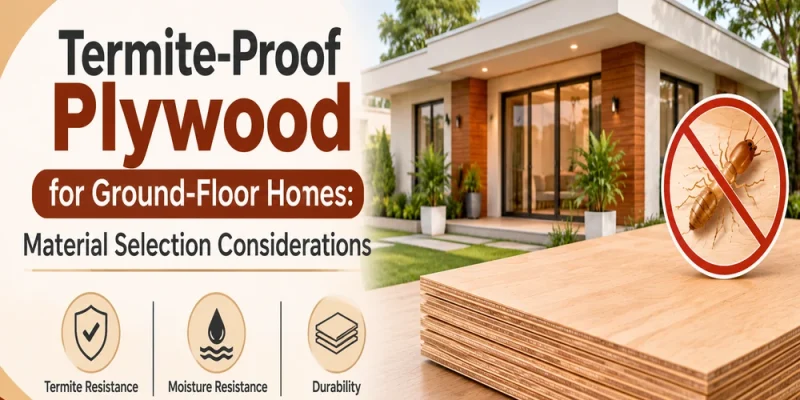
Ground-level buildings require special care in choosing the materials that will eventually be used for the new furniture, wardrobes, cabinets, and internal furniture. Being close to the earth’s surface and surrounded by moist soil creates preconditions for termite damage and deterioration of the building materials. This is why it is important to pay special attention to the choice of plywood,which plays a vital role in interior arrangements.
Choosing termite-proof plywood involves more than reading the product’s label. The nature of the protective treatments, quality of the plywood, its intended use and environment, and the like must be taken into account. Knowing these facts makes it easier to select plywood for the ground floor by the owner of the building and designer of the interior.
Why Ground-Floor Homes Need Careful Plywood Selection
Ground-level homes may pave undetected plumbing leaks, groundwater, water in the exterior walls, and insufficient ventilation in the storage rooms. All these circumstances might contribute to damage to furniture and might provide favorable conditions for termites being attracted to and damaging the wooden materials of the building without being invited directly.
Before new furniture can be installed, it is vital to determine the presence of moisture in surrounding walls, floors ,and hidden areas. In the event of moisture problems, they need to be sorted out, because no matter which plywood is used, it won’t solve the problem.
Understanding Termite Protection in Plywood
Plywood consists of layers of glued wood veneers. There are types of plywood that have termite treatments, but such treatments are not always capable of providing adequate protection against termites. This means that it is necessary to check the information provided by the manufacturer, and it is not reasonable to assume that all plywood products are similar.
Some types of termite-resistant plywood can be used in furniture like wardrobes, cabinets and other furniture where termite infestation might be an issue. However, it is important to note that other properties of plywood should also correspond to the requirements of use according to strength, thickness of wood, glue quality, and finishing of the product.
It is worth understanding the difference between moisture and termite resistance. A product that is termite resistant cannot be considered waterproof or water resistant, which means that the product should not be used in humid areas. Therefore, both properties need to be examined carefully in relation to the material selected for the interior of any building, especially those located on the ground floor.
Matching Plywood to Furniture and Interior Applications
Every piece of furniture needs to be made with the proper material. For example, wardrobes situated against exterior walls should be examined carefully. At the same time, kitchen cabinets should be made from plywood that will be able to withstand water. Storage cabinets located in utility rooms should also be resistant to humidity as well as efficient in airflow.
Moreover, the thickness and construction of plywood should be appropriate for the size and load of the particular item. It is also important to remember the quality of the surface when laminating, varnishing, painting, or accomplishing some other decorative works.
Comparing plywood with termite protection requires investigating the details of the treatment used, its aim, and the limitations given by the manufacturer. When it comes to identifying appropriate plywood, it is more effective to match it with the needs of the project rather than rely on various general descriptions.
Installation Practices That Support Long-Term Durability
Correct installation plays a significant role in keeping the effectiveness of furniture in apartments located on the ground level. Before initiating installation, plywood needs to be stored and prepared in accordance with all recommendations given by the producer. Cutting the edges and corners should also be done according to the specifications.
One should avoid putting furniture close to wet walls without eliminating the problem. It is important to mention the necessity of using proper ventilation while installing wardrobes and cabinets in order to minimize the levels of humidity indoors. In case of seeing any signs of leakage, it is necessary to carry out the repairs as soon as possible.
Regular inspections of the skirting, the back of furniture, and the inaccessible areas need to be conducted. If anything related to termites is discovered, pest control should be contacted immediately.
Making a More Informed Material Choice
The best plywood suitability for ground floor apartments is defined by its compliance with the specifications of the furniture to be made with its help. It is essential to make sure that the chosen product is appropriate for the purpose it has been made for, properly treated, and manufactured in accordance with the best practices.
Efficiently applying plywood along with observing specific maintenance of buildings while monitoring humidity levels and doing regular inspections is a good way to prevent premature destruction of the article.
Conclusion
While choosing plywood for ground floor houses, one should pay attention to the durability against termites, humidity level, quality of wood, and installation method. Selecting the right material can help maintain the strength and appearance of furniture while reducing the risk of avoidable damage. Regular maintenance and timely attention to moisture problems can further support the long-term performance of plywood furniture in ground-floor homes.








Comments