
 By
By 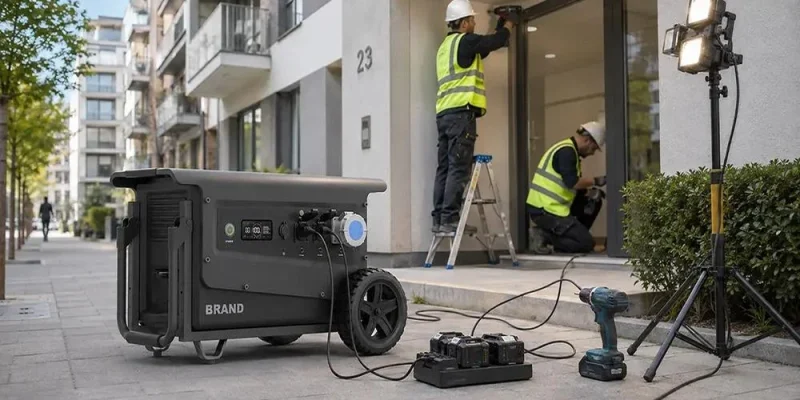
Remodeling used to be a time of crews, tools and a few weeks of hassle. It still is, but now the house puts more demands on its electrical supply. People work from home, have smart devices, keep a full fridge and often stay in the house while the work is going. When a kitchen or bathroom is torn out, or a panel is upgraded, this supply can be interrupted or stretched thin. Portable power stations have become a practical solution to this problem. Here is how they fit in and what to consider before relying on one.
Remodeling Has Changed
A generation ago, a remodel mostly affected the room being worked on. Now the whole house tends to be involved. Open-plan designs mean walls come down and circuits get rerouted. Homes have more outlets, more lighting circuits and more connected devices than they did before. Many crews work cordless tools that need to be charged continuously, and most homeowners expect the internet and a working phone signal the whole time.
All of this makes the electricity supply during a remodel more fragile. Breakers get shut off for safety and circuits isolated for hours at a time, and a single kitchen circuit can be asked to feed a saw, a charger station and a work light at once. A battery source provides a separated supply that is not dependent on the house wiring.
Living Through a Remodel
The hardest part for many families is staying in the house. A kitchen remodel is the classic example, as the old cabinets and appliances go, and for a few weeks you cook on a setup in a corridor or a spare room.
A power station makes that setup much easier. A fridge consumes a couple of hundred watts on average, although it peaks significantly more when starting the compressor. A microwave uses around 1,000 watts, a kettle 1,500 to 2,000, and a coffee machine somewhere near 1,000. A portable induction hob can draw 1,500 to 3,000 watts on its own. You don’t need to run all of these at the same time, but it helps to know the numbers.
The same applies to a home office. A computer, a monitor and a router all consume little, so even a modest battery can keep you connected through a cut in the power that would normally end your workday. On a bathroom remodel, where the water and electrical supply are both shut off, a power station can run a few lights and a phone charger, to avoid leaving the household in the dark.
Power for the Crew
Contractors often bring their own generators, but on a residential street noise and fumes cause complaints. A battery unit does not emit any noise and can be placed in the room where the work is taking place, which means shorter cable runs and less tripping over leads.
Tool batteries are the biggest daily use. A crew with a dozen cordless batteries needs a reliable place to charge them, and charging from a homeowner’s wall socket can trip a breaker. Extractors, work lights, radios and corded tools all add to the load. Having a dedicated supply for all of this protects the household circuits and keeps the day going.
Remodeling sites are often dusty and sometimes damp, so protection against both is a reasonable question to ask. Units with a sealed housing, such as the SOUOP Waterproof Industrial Power Station, take this into account. As with any equipment, look at the actual dust and water rating on the spec sheet, not the name of the unit.
When the Panel Gets Upgraded
An electrical panel upgrade is one of the most disruptive moments in a remodel. Power to the whole house can be off for most of a day. Everything in the fridge and freezer is at risk, the work area needs lighting, and the electrician still needs to run some tools.
Planning ahead makes a big difference. Move the essentials to a power station prior to the start of work: the fridge, a few lights, a phone charger and the router if the line stays live. Charge the unit the night before. And remember that the electrician’s safety is the priority. A power station is a separate supply and should never be plugged into a house socket to feed the wiring, as it can send power back into the circuits that the electrician is working on.
What to Look For
The spec sheet has a lot of numbers, but a few matters most.
Continuous and peak output. Sum what you might run at the same moment and stay comfortably below the continuous rating. The peak figure covers surges due to motor or compressor starting.Capacity in watt-hours. This determines how long you can run. A 3,000Wh battery powering a 500W load will last roughly five hours in theory, a little less with real-life inverter losses.
Battery chemistry. LiFePO4 cells are the norm in better units. They handle heat, are generally safe and can last for 3,000 cycles or more.Charging speed. A fast wall charge allows the unit to be ready by morning. Solar input is useful if the site has sun, but little supply.
Extras. UPS-style switchover protects computers when the mains drops. Expandable batteries let you scale up. Sockets in the right number and type save you from stacking adapters.
A Few Practical Tips
Charge the unit to full ahead of any planned outage and maintain it when it is not in use. Place it on a raised and level surface where it is out of water and direct sun, and leave space around the vents. Use extension cords that are rated for the load, keep them as short as possible, and use GFCI or RCD protections in wet areas. Label what is plugged in, so nobody unplugs the fridge to charge a drill. And write down the wattage of your key devices somewhere you will find it, as guessing usually leads to an overloaded unit.
Sizing Your Setup
The easiest way to size a system is to plan around your busiest hour. List the devices that could run together, such as the fridge, a couple of lights, a saw and a battery charger, sum their wattage and leave some margin. Then estimate how many hours you want between charges to work out the capacity.
Larger projects, where a crew is working while the family stays in the house, may well warrant a unit in the 5000W class. A model like the SOUOP Portable Power Station 5000W can handle tools and a temporary kitchen from the same source, and battery modules can be added if the job grows. What matters most is that the size fits your list of devices, not the headline number.
Final Thoughts
Modern-day remodeling puts more demands on a home’s electrical supply than before, and the risk falls on families as well as contractors. A portable power station will not replace good planning or a qualified electrician, but it can keep the fridge running, the router on and the tools charged up when the house wiring is out of order. Work out your loads and choose a unit that fits them, and use it carefully, and the power side of a remodel becomes one less thing to worry about.












Comments