
 By
By 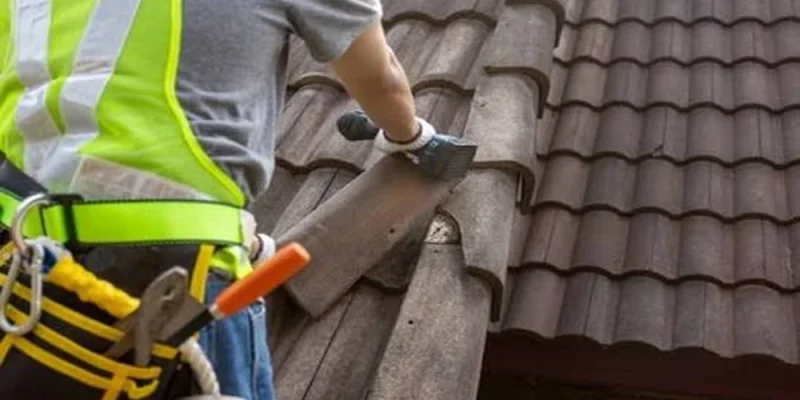
For generations, there was one question that mattered more than almost anything else when judging a roof.
Does it leak?
If the answer was no, most property owners were satisfied. A roof was expected to keep the weather outside, remain securely attached to the building and survive for as many years as possible before replacement became unavoidable.
Those things still matter. Waterproofing remains the fundamental purpose of any roof.
But in 2026, simply keeping rain out is no longer enough to describe a good roofing system.
Today’s roofs are increasingly expected to contribute to energy efficiency, cope with more demanding weather, accommodate solar technology, meet increasingly sophisticated fire-safety requirements and work alongside ventilation and insulation systems.
On commercial buildings, roofs may also carry substantial mechanical equipment, provide access routes and support renewable energy installations.
The question has changed.
It is no longer simply whether a roof works today. Property owners increasingly need to consider how it will perform over the next twenty or thirty years.
A roof has become a building system
One of the biggest changes in modern roofing is the recognition that a roof cannot always be considered in isolation.
The covering is only one component.
Beneath and around it sit insulation, membranes, ventilation, structural elements and drainage systems. Above it there may be solar panels, air-conditioning equipment or access walkways.
Changing one element can influence another.
Add insulation without considering ventilation and moisture behaviour may change. Install solar panels without assessing the condition of the covering underneath and future maintenance becomes more complicated. Alter drainage without understanding the roof design and water may begin accumulating where it should not.
The best roofing decisions therefore consider the entire system rather than focusing purely on the visible surface.
Energy performance has moved up the agenda
A poorly performing roof does not necessarily leak.
It can remain completely watertight while allowing unnecessary heat to escape from the building below.
That distinction has become increasingly important as homeowners and businesses pay more attention to energy performance.
Heat rises, making the upper part of a building particularly important when considering insulation. However, simply adding as much insulation as possible is not always the complete answer.
Roof construction, ventilation and moisture control need to work together.
Older properties can be particularly challenging because they were built according to very different principles from modern homes.
A Victorian house, a 1970s office and a contemporary warehouse may all require completely different approaches.
Good roofing work recognises those differences rather than applying the same solution everywhere.
Fire performance cannot be treated as an afterthought
Fire safety has understandably become a much bigger consideration throughout the construction industry.
Roofing forms part of that conversation.
Modern roofs can contain multiple layers of insulation, membranes, coverings and other materials. Commercial roofs may also support photovoltaic panels and electrical equipment.
The performance of those individual components matters, but so does the way the complete roof system has been designed and installed.
Substituting one product for another because it appears similar can potentially change the performance of the overall specification.
This is one reason competent installation and adherence to manufacturer requirements matter.
The roof is not simply a collection of materials purchased independently and assembled in roughly the right order.
It is a designed system.
Solar has created an entirely new set of considerations
Solar panels have transformed the role of roof space.
A surface that previously existed primarily to protect the building can now generate electricity for decades.
That is an enormous opportunity, particularly on large commercial properties.
It also creates practical questions that were far less common twenty years ago.
How old is the existing roof?
How much useful life does it have remaining?
Can the structure accommodate the proposed installation?
How will maintenance teams access the waterproofing?
What happens if a leak develops underneath the array?
Will the roof need replacing before the solar panels reach the end of their own working life?
These questions are much easier to answer before installation than afterwards.
For anyone considering significant work, professional roofing services increasingly need to take future technologies into account rather than focusing exclusively on the immediate repair or replacement.
Weather resilience means more than surviving a storm
The British climate has always tested roofs.
What is changing is the range of conditions buildings may need to handle.
Extended hot periods place roofing materials under thermal stress. Intense rainfall puts drainage systems under pressure. Strong winds test fixings and exposed edges.
A roof designed or refurbished today could still be protecting the building in the 2040s or 2050s.
That makes future weather conditions relevant to decisions being made now.
Drainage provides a straightforward example.
A system capable of managing ordinary rainfall may struggle during an unusually intense downpour if outlets are undersized, poorly positioned or partially obstructed.
The waterproofing may be perfectly sound, yet the roof still fails to manage water effectively.
Resilience is therefore about how the whole roof performs under difficult conditions, not simply whether the covering itself remains intact.
Flat roofing shows how much expectations have changed
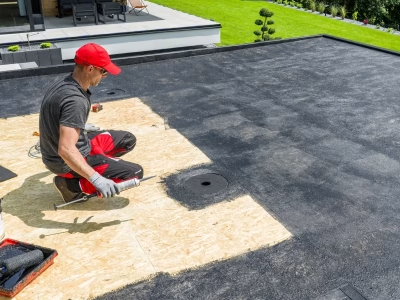
Few areas demonstrate the evolution of roofing better than flat roofs.
Older flat roofs were often treated as simple waterproof surfaces.
Modern versions can be considerably more sophisticated.
They may incorporate high levels of insulation, solar installations, plant equipment, drainage management or even green roof systems.
The waterproofing underneath all of that needs to remain reliable and maintainable.
Modern membrane systems such as Alwitra Evalon roofing are examples of how flat-roof technology has developed beyond the traditional materials many property owners still associate with this type of construction.
Whatever system is selected, detailing remains critical.
Rooflights, outlets, parapets, penetrations and changes in level are usually more demanding than the large uninterrupted areas between them.
A roof can use an excellent material and still perform poorly if those details are badly executed.
Commercial roofs are becoming working spaces
Look across many modern industrial estates and the roofscape is noticeably different from twenty years ago.
Solar arrays occupy large areas.
Air-conditioning systems and ventilation equipment are increasingly common.
Some buildings incorporate green roofs or rainwater-management systems.
Maintenance teams require regular access.
This means the roof is no longer simply a passive part of the structure.
It is becoming an operational space.
For building owners and facilities managers, that changes how maintenance should be approached.
Waiting until water appears inside the building is a reactive strategy.
Planned commercial roofing inspections can identify deteriorating details, drainage issues and damage caused by other trades before they affect business operations.
That last point is easily overlooked.
Roofers are not always the people who damage roofs.
Engineers servicing air-conditioning equipment, electricians working on solar installations and contractors installing new plant may all need access. Without suitable walkways and appropriate care, repeated foot traffic can gradually affect roof coverings.
Workmanship remains difficult to replace
Technology has transformed roofing materials, but one old-fashioned factor remains stubbornly important.
Workmanship.
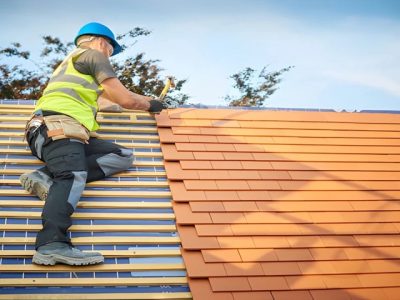
A technically impressive roofing system still depends on someone installing it correctly.
Details around chimneys, outlets, rooflights, abutments and penetrations require judgement and care. Manufacturer instructions matter, but so does understanding how water actually behaves on a building.
The same applies to repairs.
Applying sealant over a visible crack may stop water temporarily without addressing why the crack developed.
Replacing a slipped tile may achieve little if neighbouring fixings are also deteriorating.
The most effective repair is not necessarily the one that makes the immediate symptom disappear fastest.
It is the one that deals with the cause.
Maintenance needs to catch up with technology
There is a strange contradiction in modern construction.
Buildings are becoming more technically sophisticated, yet roofs are still frequently ignored until something goes wrong.
People service boilers.
Businesses maintain vehicles.
Air-conditioning equipment receives scheduled attention.
Fire alarms are tested.
Yet the roof protecting all of those assets can go years without being properly inspected.
That approach becomes increasingly difficult to justify as roofs take on more functions.
Solar panels do not eliminate the need to inspect the waterproofing beneath them. Green roofs still require drainage maintenance. High-performance membranes still depend on clear outlets and sound detailing.
“Low maintenance” should never be confused with “no maintenance”.
Sometimes keeping the existing roof is the better decision
Improved performance does not automatically require replacement.
This is an important point, particularly when sustainability is part of the discussion.
If an existing roof remains structurally sound and its defects can be repaired effectively, extending its useful life may be preferable to removing large quantities of serviceable material.
Assessment should come before prescription.
Some buildings genuinely need complete roof replacement.
Others need targeted repairs, improved drainage, upgraded insulation or attention to specific details.
The correct answer depends on the building rather than the age printed on an installation certificate.
The definition of a good roof is changing
Keeping water outside will always be the first test of a roof.
If it cannot achieve that, everything else becomes irrelevant.
But passing that test no longer tells the whole story.
A good roof increasingly needs to manage heat, moisture and rainfall effectively. It may need to support renewable energy technology, accommodate maintenance access and satisfy demanding performance standards. It also needs to remain repairable rather than becoming impossible to maintain once other equipment has been installed above it.
Most importantly, it has to continue doing these things for years.
That changes the conversation property owners should be having with roofing contractors.
“Can you stop this leak?” remains a perfectly reasonable question when water is entering the building.
For planned roofing work, however, there are now bigger questions worth asking.
How will this roof perform?
How will we maintain it?
What might we need from it in ten years?
And will the decisions made today still make sense when the building, technology and weather around it have changed?
A roof that does not leak is doing its most basic job.
A genuinely good roof is designed to keep doing it while everything else expected of the building continues to evolve.






Comments