
 By
By 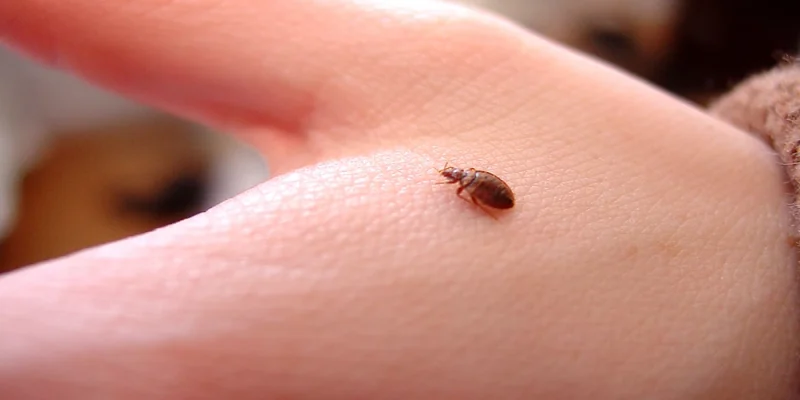
Heat kills every bed bug life stage in a single visit. Non-heat methods kill more slowly but keep working for weeks after the technician leaves. That trade-off, speed against residual protection, is the whole debate, and it explains why operators running Hot Bugz thermal equipment often deploy a dust or a biopesticide alongside the heaters rather than treating the two approaches as rivals. Understanding what each method physically does to an insect makes the choice much easier than reading marketing copy from either camp.
Which method kills bed bugs faster?
Heat, by a wide margin. Research by Kells and Goblirsch published in the Journal of Economic Entomology found that all mobile bed bug stages died after roughly 90 minutes at 113°F (45°C), and that 118°F (48°C) killed adults in about 20 minutes and eggs in about 90 minutes. A whole-room thermal treatment is therefore finished in a day.
Non-heat treatments work on a schedule set by insect behavior instead of physics. A residual product only kills bed bugs that walk across it, and since adults feed roughly weekly and hide the rest of the time, full population collapse commonly takes four to six weeks and two to four service visits.
What can heat reach that sprays cannot?
Eggs and deep harborage. Bed bug eggs are cemented into seams, screw holes, and wall voids where liquid applications rarely penetrate, and they hatch six to ten days later, which is why an infestation seems to return when it was never fully treated. Hot air fills a space rather than coating a surface, so it reaches the interior of a box spring, the hollow of a bed frame, and the gap behind a headboard.
Heat also sidesteps the resistance problem entirely. Pyrethroid resistance in North American bed bug populations has been documented in field studies for close to two decades, driven by nerve-receptor mutations and elevated detoxifying enzymes. No insect evolves tolerance to protein denaturation.
The catch is that heat offers zero protection afterward. Treat a bedroom on Tuesday, bring home an infested nightstand on Friday, and you are starting over.
Which non-heat methods are worth using?
Four have real evidence behind them, and they behave very differently from one another.
Desiccant dusts scratch and dry out the insect’s waxy cuticle. Rutgers trials led by Changlu Wang found that silica gel based dusts such as CimeXa killed bed bugs substantially faster than diatomaceous earth, which often needed a week or more. Applied as a light film in cracks and outlet boxes, silica dust can remain effective for months, though it must stay dry.
Fungal biopesticides work by infection. Aprehend, developed at Penn State, uses spores of the fungus Beauveria bassiana that germinate on contact and kill within several days, with a residual window of about three months. It is applied as targeted barrier bands rather than broadcast spraying.
Cold works but is impractical at scale. University of Minnesota research established that items need to reach 0°F (minus 18°C) and stay there for at least four days to kill all stages, and many home freezers run warmer than that. Cryonite style carbon dioxide snow drops surfaces well below zero and kills on contact, but it has no penetration and no residual.
Structural fumigation with sulfuryl fluoride is the only non-heat option that matches heat for completeness. It requires tenting the building, 24 to 72 hours of occupant displacement, and licensed applicators following label requirements to the letter.
What does each approach cost in 2026?
Single room heat treatments typically run $500 to $1,500, and whole home thermal work lands between $1,200 and $4,000 depending on square footage, clutter, and access. Chemical and dust programs quote lower per visit, often $300 to $600, but two to four required visits push the total into a similar range. Whole structure fumigation is the outlier, commonly $2,000 to $8,000 or more for a single family home once tenting and hotel nights are counted.
Compare total resolution cost rather than the first invoice. For hotels, short-term rentals, and student housing, the number that matters is usually lost revenue per vacant night, which is where same-day heat pays for itself.
When is a Hot Bugz heat treatment the wrong choice?
In shared-wall buildings where adjacent units have not been inspected, and in spaces full of heat-sensitive contents. Heat kills what sits inside the treated envelope and nothing beyond it, so bugs that already migrated into a neighboring apartment through an electrical chase will walk back once the room cools.
Items that need to come out first include aerosol cans, candles and wax, vinyl records, medications, live plants, pets, oil paintings, and instruments with glued joints. A unit packed floor to ceiling with stored belongings also heats unevenly, and clutter is the single most common reason a thermal job underperforms.
How do professionals combine the two?
The standard approach is heat for elimination and non-heat for insurance. A technician brings the room to lethal temperature, then applies silica dust or a fungal barrier at door thresholds, bed legs, and baseboards so anything reintroduced afterward hits a treated surface. Interceptor cups under bed legs and a zippered mattress encasement provide monitoring and containment, and a follow-up inspection at two and four weeks confirms the result. The EPA’s own guidance frames bed bug control this way, as integrated pest management rather than a single product.
Heat and non-heat methods answer different questions. If you need the problem gone today, heat is the only realistic option. If you need protection against reintroduction, dust and biopesticides do what heat cannot. Ask any Hot Bugz operator for a plan that includes both, and request the temperature sensor readings from your job so you can verify the room actually hit lethal range instead of taking it on faith.








Comments