
 By
By 
In the architectural heart of the South Bay, the demands placed on commercial structures are rigorous. From the fluctuating temperatures of the Santa Clara Valley to the strict environmental mandates of California’s building codes, a building’s roof is its most critical defensive layer. For property owners looking to secure their assets, Campbell Roofing experts have become the go-to resource for navigating the complexities of large-scale exterior protection.
Choosing the right roofing strategy is no longer just about stopping leaks; it is about energy efficiency, structural longevity, and maximizing the return on a significant capital investment.
Understanding the Flat Roofing System Architecture
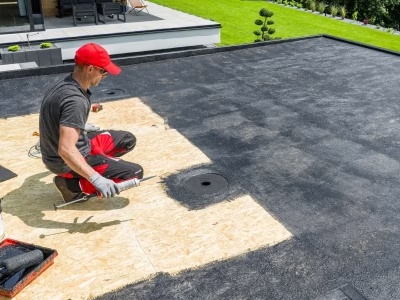
Most commercial buildings utilize a flat roofing system due to its cost-effectiveness and the ability to house heavy HVAC equipment on the rooftop. However, “flat” is a bit of a misnomer. These systems are actually low-slope structures engineered to direct water toward specialized drainage points.
The success of a low-slope roof depends entirely on its “stack-up”-the combination of the structural deck, the vapor barrier, the insulation boards, and the final waterproof membrane. If any of these layers are compromised, the entire system can fail. This is why commercial property managers prioritize precision during the installation phase. A well-engineered flat system avoids the “ponding” of water, which is the leading cause of premature material degradation and structural stress.
The Rise of TPO Roofing: The Modern Industry Standard
As businesses move toward greener operations, TPO roofing (Thermoplastic Polyolefin) has emerged as the premier choice for commercial facilities. This single-ply reflective membrane is specifically designed to combat the “urban heat island” effect found in developed areas like Campbell and San Jose.
Why TPO is the Preferred Choice for Businesses:
- Solar Reflectivity: TPO is naturally white or light gray, reflecting a vast majority of the sun’s UV rays. This significantly reduces the “heat gain” of a building, leading to lower air conditioning costs during California’s scorching summers.
- Heat-Welded Seams: Unlike older systems that rely on adhesives or tapes, TPO seams are fused together using hot-air welders. This creates a monolithic, waterproof sheet that is incredibly resistant to leaks.
- Chemical and Mold Resistance: TPO is engineered to resist common industrial pollutants, oils, and fungal growth, making it ideal for warehouses and manufacturing plants.
- Flexibility: The material is highly resistant to punctures and tears, but flexible enough to handle the natural thermal expansion and contraction of a large building.
Strategic Installation and Maintenance in the South Bay
A roof is only as good as the team that installs it. In the commercial sector, “Campbell Roofing” professionals emphasize a holistic approach that begins long before the first roll of membrane is laid down.
The Diagnostic Phase
Before a replacement or repair begins, modern contractors utilize infrared thermography to detect moisture trapped beneath the current surface. This data-driven approach allows for targeted repairs, potentially saving property owners thousands of dollars by avoiding a full “tear-off” when only a specific section is compromised.
Navigating Title 24 Requirements
California’s Title 24 Energy Standards are some of the strictest in the nation. Commercial roofs must meet specific “cool roof” criteria regarding solar reflectance and thermal emittance. Professional installers ensure that every material used-from the insulation thickness to the TPO mil-strength-is fully compliant, protecting the owner from legal liabilities and ensuring eligibility for energy rebates.
The Lifecycle Cost Advantage
Business owners often make the mistake of looking only at the “upfront cost” of a roof. However, the true value of a flat roofing system is found in its lifecycle cost. A cheap, poorly installed roof may last 10 years and require constant maintenance. In contrast, a high-quality TPO roofing installation, backed by a professional maintenance plan, can easily last 20 to 30 years.
Key Maintenance Steps for Longevity:
- Bi-Annual Inspections: Checking for punctures caused by HVAC technicians or wind-blown debris.
- Drainage Clearing: Ensuring scuppers and internal drains are free of leaves and silt.
- Seam Audits: Proactively checking heat-welded areas to ensure the bond remains 100% intact.
Why Choose a Specialized Local Partner?
Commercial roofing is an entirely different discipline than residential work. It requires specialized equipment, higher insurance bonding, and a crew trained in industrial safety. By working with a local specialist, you gain the advantage of rapid response times. If a leak occurs over a server room or a retail floor, you cannot afford to wait for a contractor traveling from across the state.
At Roofing Campbell, we provide the technical expertise required to manage these high-stakes projects. We understand that your business needs to remain operational during construction, which is why we specialize in “low-impact” installations that minimize noise and vibration.
Conclusion: Future-Proofing Your Commercial Property
Your roof is more than just a structural necessity; it is a tool for energy conservation and asset protection. By investing in a high-quality TPO roofing system and partnering with a Campbell Roofing expert, you are ensuring that your business is protected from the elements and prepared for the future.
Don’t wait for a ceiling stain to indicate a problem. Take a proactive stance on your building’s health today to enjoy the peace of mind that comes with a secure, energy-efficient commercial roof.




Comments