
 By
By 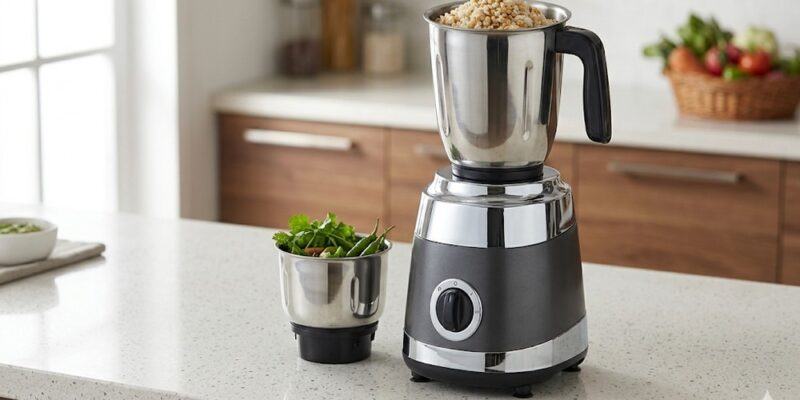
Walk into any electronics store and ask for a good mixer grinder. Within seconds, you’ll be drowning in numbers – 500W, 750W, 1000W – and a salesman who swears every model is “best for home use.” Sound familiar?
Here’s the thing. Choosing the right wattage isn’t rocket science, but it does require knowing your own kitchen first.
Your Kitchen Has Needs. Match Them.
Think about what you actually cook on a weekday morning. If it’s a quick smoothie, some coconut chutney, or the occasional lassi honestly, a 500-600W mixer grinder does the job cleanly. It’s light, doesn’t hog electricity, and is easy enough to rinse and put away. Perfect for a working couple or someone living alone who isn’t exactly running a dhaba out of their kitchen.
Now, if your mornings look more like soaking dal the night before, making fresh masala, and grinding enough batter to feed five people, that’s a different conversation entirely. A 700-750W model is built for exactly this kind of daily Indian cooking. It handles dry coconut, soaked lentils, and whole spices without making the motor cry. Most households with three to five members will find this range handles everything without drama.
And then there’s the joint family kitchen, the one where festivals mean grinding kilos of rice batter, and Sunday lunch involves a minimum of four different chutneys. For that kitchen, nothing below 900-1000W makes practical sense. These machines are built with torque in mind, meaning they push through tough ingredients faster and more smoothly, even during long sessions.
Wattage Alone Won’t Save You
Here’s what most buying guides skip: a high-watt mixer with a poorly built motor is still a bad mixer. Motor quality matters as much as the number on the box. Copper-wound motors, for instance, run cooler, last longer, and actually use power more efficiently than cheaper alternatives – which means your electricity bill doesn’t spike unnecessarily.
So yes, check the wattage. But also ask about the motor construction, whether it has overload protection, and how the blades are built. Stainless steel blades with proper angles make grinding smoother regardless of wattage.
The Practical Answer
Stop overthinking it. Here’s the short version:
Cooking for 1-2 people, light use? 500-600W is enough.
Family of 3-5, regular Indian cooking? Go with 750W, no second thoughts.
The best mixer grinder isn’t the most powerful one. It’s the one that matches exactly how you cook, every single day – without wasting power, overheating, or giving up on you mid-recipe.
Buy smart. Your kitchen will thank you.













Comments